Tuesday, 11 November 2014

Ba7........ Dissertation Questionnaires

Questionnaire on Consumer Shopping Habits and Attitudes.


1. Gender. (please circle appropriate)

Male Female

2. Age. (please circle appropriate)

16-26 27-36 37-46    47-56     57-66    67-76    77-86     86+
Screenshot 2014-11-05 at 18.54.24.png
4. Where do you buy most of your clothing/textiles from? (please circle appropriate)

High Street Chains Online Independent shops

5. What do high street chains offer that iindependentshops can’t?

……………………………………………………………………………………………………………..……………………………………………………………………………………………………………..……………………………………………………………………

6. Have you considered buying anything from online craft websites, such as ETSY.COM? (please circle appropriate)

Yes No

7. Would you be willing to pay more for a more individual, personalised product? (please circle appropriate)

Yes No Undecided


Ba7........ Dissertation Writing Plan

Dissertation Writing Plan

  • Cover page,
    • This should contain the title of the report, your chosen form of report, name, project.
  • Contents Page.

  • Abstract
    • This is a paragraph or two (maximum 250 words), which forms a brief summary of what your Research Report is about, the main points of its argument and the conclusions you have reached.

  • Introduction
    • You should introduce your report by briefly discussing your choice of form, subject matter, the questions you are investigating and the focus of each chapter/section. You also need to outline the research you’ve carried out, and the methods you’ve used to analyse the subject.

  • MAIN PARAGRAPHS!!
      • An explanation of the craft industry in relation to the wider global textile industry.
      • Overview of wider global industry and overview of points of discussion which may affect craft industry.
      • Discussion on recent technological advances in digital print and stitch, how has global industry used this to their advantage what impact could this have on craft?
      • Discussion of production methods, between both industries.
      • Questionnaire results, gaining a consumer view of local craft
      • Discussion of observation and content analysis results, fair representation/pricing?
      • Has any of this really affected the craft industry?
      • Contemporary examples of designers/design companies, what does this prove?

  • Conclusion
    • This is an important section of your report in which you should summarise and critically evaluate the issues you’ve presented in preceding chapters. In doing this, you can clarify your own personal position on the subject to the reader. Try not to include new ideas or information in the conclusion, unless it is used to suggest further research that could follow on from your own study.

  • Appendices
    • Only use appendices if you have additional material that is essential to a full understanding of the main text, for example questionnaire forms or transcripts of interviews. Appendices are normally discussed and referred to in the text of the chapters (e.g. see Appendix A).

  • Bibliography
    • Your bibliography is a list of every source you have used in completing the report, not just the ones you have referenced in the text. The bibliography will typically include books and other print sources (eg. periodical and newspaper articles), but can also include films, DVDs, websites, CD-ROMs, or any other electronic sources. Your bibliography must be formatted using the Harvard system (see section 4).

Monday, 10 November 2014

Ba7......... PDP on individual tutorial and seminars


Ba7.......... Seminar - When to quit?


WE RESTORE ORDER WITH IMAGINATION!

" A professional writer is an amateur who didn't quit ".

Recognising when to stop - Look at methodology, keep looking at things from different ways.

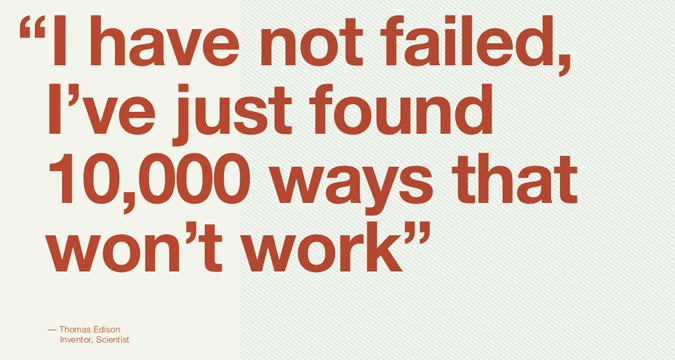
" FAIL QUICKLY "

Sunk Cost
Time, money or sweat you've put into something that holds you there when you should have moved on or walked away.

Opportunity Cost
Recognising things you could be doing with your time and money. If this is better, do it!!!

WHAT WOULD I RATHER BE DOING?

Strategies for continuing...

  • Think, why did you start?
  • Take time to think differently, take time out.
  • Make a contract with yourself, what can you do in the time you have?
  • Do the worst first?
  • Find someone you trust, build a support team.
  • Have a schedule, make lists and plan time.
  • Write notes, not yet sure what is important.
  • Break it down into small bites.
  • WALLOW, but not for too long!
  • Go out, walk away and come back.
  • Be scared, take risks!
  • Learn to forget, get on with it, it's not personal.
  • Envisage yourself doing 'it'.
  • Stop focusing on the struggle, look for solutions.

Ba7............ Finishing Seminar

This workshop, with our tutor, was based upon asking the question of when a piece of work is actually finished.

Dictionary defination..
Something has come to an end, to complete. -- Is there something specific in finishing textiles.


Ideas to think about...

  • What are you attempting to communicate?
  • How does the content relate to your intention?
  • How do certain materials have a finished state?
  • Is there any particular balance in relation to...
    • Appearance
    • Weight 
    • Texture
    • Colour
    • Size
  • Is it important to the 'brief' to judge how finished something is?
  • How does the space complete the work?

What do you need from a piece of work to achieve completion?


  • Is finished an issue?
  • Can we finish without creating a finished piece of textiles?
  • What is the specific role in a finished piece of textiles?
  • Is 'finished' just part of a capitalist society?
  • Is 'finished' a positive process?