
Showing posts with label BA7 Lecture and Workshops. Show all posts
Showing posts with label BA7 Lecture and Workshops. Show all posts
Monday, 10 November 2014

Ba7.......... Seminar - When to quit?
 WE RESTORE ORDER WITH IMAGINATION!
" A professional writer is an amateur who didn't quit ".
Recognising when to stop - Look at methodology, keep looking at things from different ways.
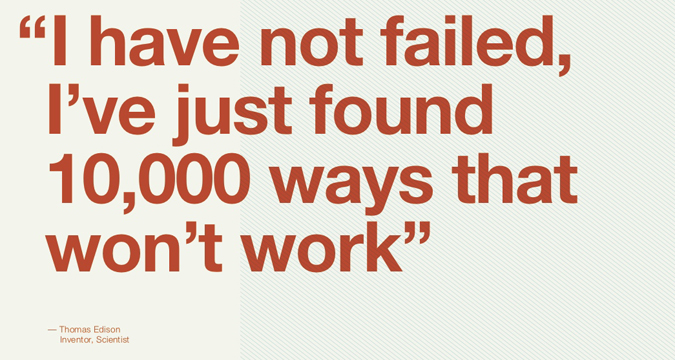
" FAIL QUICKLY "
Sunk Cost
Time, money or sweat you've put into something that holds you there when you should have moved on or walked away.
Opportunity Cost
Recognising things you could be doing with your time and money. If this is better, do it!!!
WHAT WOULD I RATHER BE DOING?
Strategies for continuing...
- Think, why did you start?
- Take time to think differently, take time out.
- Make a contract with yourself, what can you do in the time you have?
- Do the worst first?
- Find someone you trust, build a support team.
- Have a schedule, make lists and plan time.
- Write notes, not yet sure what is important.
- Break it down into small bites.
- WALLOW, but not for too long!
- Go out, walk away and come back.
- Be scared, take risks!
- Learn to forget, get on with it, it's not personal.
- Envisage yourself doing 'it'.
- Stop focusing on the struggle, look for solutions.
Ba7............ Finishing Seminar
This workshop, with our tutor, was based upon asking the question of when a piece of work is actually finished.
Dictionary defination..
Something has come to an end, to complete. -- Is there something specific in finishing textiles.
Ideas to think about...


Dictionary defination..
Something has come to an end, to complete. -- Is there something specific in finishing textiles.
Ideas to think about...
- What are you attempting to communicate?
- How does the content relate to your intention?
- How do certain materials have a finished state?
- Is there any particular balance in relation to...
- Appearance
- Weight
- Texture
- Colour
- Size
- Is it important to the 'brief' to judge how finished something is?
- How does the space complete the work?
What do you need from a piece of work to achieve completion?


- Is finished an issue?
- Can we finish without creating a finished piece of textiles?
- What is the specific role in a finished piece of textiles?
- Is 'finished' just part of a capitalist society?
- Is 'finished' a positive process?
Friday, 7 November 2014


Tuesday, 4 November 2014


Thursday, 30 October 2014

Wednesday, 29 October 2014

Thursday, 23 October 2014

Wednesday, 22 October 2014

Monday, 20 October 2014
Ba7........... Drawing workshop.
Today's drawing workshop was based around two main words; order and chaos. The idea of the workshop was to give us an insight into the importance of contrasts in our work.
We started off by drawing some everyday objects, such as pens, pencils and bottles, drawing them in an orderly fashion. We had to think carefully about the composition of the objects and the material in which we used to draw. We completed a set of these, changing the way we worked a little each time, to show how changing something simple, can quickly change how you approach your drawing.
Following this, we were sent away to complete another set of drawings, this time based upon the idea of chaos. Again thinking about composition and materials, the idea was to be more lose in the way we were working.
From here, we set about mixing the two ideas together in contrast. Having a drawing with elements of organisation as well as chaos, thinking carefully about our composition and again our drawing materials, to give different effects.
Whilst I really enjoyed the drawing workshop today, I was really in the mood to draw, I did not enjoy the chaos aspect of it. Starting off with the organisation worked really well for me, but I did not know where to begin when it came to the chaos drawings. This was even harder when we had to mix the two ideas, I just could not let go of that clear organisation. After much work, I think I did actually manage it in the end, I got the idea that perhaps looking at shape of texture of the object rather than what it was, allowed me to be a little more free.
When we had finished the task, we were told that the idea behind the workshop was based on contrasts. This is not just organisation, but contrast in every aspect of our of work. I think this is why I have recently enjoyed visiting the castle museum for a short while, as the environment makes a nice contrast to my home or the studio environment.
Thursday, 16 October 2014


Wednesday, 15 October 2014
Ba7........ 15th October Ava workshop.
This workshop was based on a quick recap of the Ava software, ready for the coming weeks up till Christmas where we have a series of more in depth Ava workshops.
Ava is the software for the tools and colour system is for the colours.
When you click to open Ava, it opens both of this software.
To open a new file....
File ➡️ new. When you click on this a new window will open up giving you options on the type of file you would like to open.
Mode ➡️
24 bit allows you to draw in full colour.
8 bit image allows you to draw with one colour on that canvas, but allows tonal values.
1 bit spot allows you draw only in one colour with no tones, just a flat image.
To change colour on Ava... Double click on the box at the top of the tool box and choose a colour from the colour system software.
On a 1 bit spot, change the colour by going to WINDOW, LAYER and clicking on the colour box....
However you can only use one colour per layer, so changing the colour will cahnge the whole layer. You can create more than one layer by going to WINDOW, LAYER and clicking on the small boxes with different stripes of colour. Click on one of these to add another layer, make sure the pencil is highlighted on the image you want to edit, you can colour as above.
⬇️
The T box allows you to adjust the transparency of each of the layers.
Create stitch on AVA....
Use a 1bit spot file.
Select brush style and go down to the bottom of the brush selection screen where it says mark and space. This will change the length of the mark and the space between each one. When used, this create the effect of digital stitching.
Create weave pattern on AVA....
VIEW, GRID... Then click show and snap to.
Fill in every other column in the grid for the weft. Add another layer and repeat this process with the blank columns.
Then fill in every other row.
Reduce the size of the image to about 1cm by 1cm
Click on SET REPEAT, choose the number of repeats and zoom out.
On a Mac...
CMD +/- to zoom in or out.
For next session, bring in a scan of your work to work on in the session.
Monday, 13 October 2014


Ba7 .......... Connection Between Maker and Audience
This lecture was based upon the different relationships you can have with your audience and your work. We firstly went through a variety types of relationship, before creating a map of how we think our relationships should be now and in the future.

 Someone sees you skills/work and asks you to create something based on that style.
 You work for one person has triggered more work, it has inspired you, pushed your thinking forward.
 The object is created with more input with the audience, either they have to do something or they like it better than you do.

 About talking to the audience; advertising, trade shows, interaction, online; blogs, Facebook, online
portfolio, email. Everything that is not the actual object.
 Feedback through the object, not direct, which gives you more ideas for projects and future works. This may be possibly through publicity; either positive or negative.
 Audience almost become a maker with a much larger input.

Market research, a continual reference to audience input, aiding development of final objects. Everything informs, test these ideas and constantly develop.

A fan base? A group of people who have a common interest in you as a maker and what you have to say.
Like a lecturer. Changing or challenging people's perceptions.

Collaboration of sorts with a participant being a wide idea. Could be helping to make, giving feedback or other role such as a model.

The maker has helped/aided the development of many objects. Perhaps an employee following your design brief or a machine creating digital designs. Communicating and inspiring..
Tailoring you work practice for different ideas/requirements.
Someone sees you skills/work and asks you to create something based on that style.You work for one person has triggered more work, it has inspired you, pushed your thinking forward.The object is created with more input with the audience, either they have to do something or they like it better than you do.
Something has happened to the object either it is disliked, or loved. Need to go back and make another. Audience input!
About talking to the audience; advertising, trade shows, interaction, online; blogs, Facebook, online portfolio, email. Everything that is not the actual object.
Audience almost become a maker with a much larger input. Market research, a continual reference to audience input, aiding development of final objects. Everything informs, test these ideas and constantly develop.
A fan base? A group of people who have a common interest in you as a maker and what you have to say.
Like a lecturer. Changing or challenging people's perceptions.
Collaboration of sorts with a participant being a wide idea. Could be helping to make, giving feedback or other role such as a model.
The maker has helped/aided the development of many objects. Perhaps an employee following your design brief or a machine creating digital designs. Communicating and inspiring..
Thursday, 9 October 2014

Monday, 6 October 2014
Ba7........ Learning Outcomes
L.O. 1
Demonstrate consistent knowledge and understanding of your subject area, making detailed reference to current and emerging practice.
IN OTHER WORDS.... Making sure that you engage in contemporary research which relates to your subject area. Key is the planning and development of research. Visits and exhibitions must be stated as evidence of engagement into your subject area. Research must be in-depth, not the first piece of research you come across on the internet.
L.O. 2
Identify issues or questions relevant to your subject and adopt established research methods, clear analysis and appropriate written and visual communication through a draft research report.
IN OTHER WORDS.... This must be clear in draft research report. Range of sources of research - library, internet etc. Keys are; PLANNING, LAYOUT, SPELLING and PICTURES for visual readers. Research must be analysed, breaking it down into a research file, break it down in stages - it will grow and shrink as research deepens. These will be referenced and established through HARVARD REFERENCING.
L.O. 3
Evidence a clear understanding of contextual, historical and ethical concepts using research material from a variety of sources relevant to your own practice.
IN OTHER WORDS.... This learning objective focuses on what you do with your research and it impacts you work. How does all you work link together? Gathering lots and lots of information, and making connections to your work. This information should be embedded into your work. Based on the context and sourcing of you work.
L.O. 4
Plan your learning, using a range of techniques, references and approaches appropriate to your subject.
IN OTHER WORDS.... Basically sitting and planning everything. Be clear and document everything. This is through PDP, Organisation and Photographing!
L.O. 5
Evaluate a diverse field of information and ideas in order to make informed judgements about appropriate questions and potential solutions to problems.
IN OTHER WORDS.... Research, research, research. Gathering information from a wide range of sources, and the ability to shrink it all down into one, single report. This means information must be read through and key points picked out to give the most appropriate information to your research report. Links between research and studio practice.
L.O. 6
Communicate creatively and appropriately to a variety of audiences using spoken word, text and images.
IN OTHER WORDS.... This learning outcome relates to the presentation of your work. Everything must be clear and relate to each other, to show a clear and progressive journey through the project stages moving into to development and sampling.
Ba7...... Project briefing Lecture
 Ba7 Project Briefing.
End of third year = 4pm 23rd May, ONLY 228 DAYS LEFT!!!
Issues to consider this year...
Ambition, Planning, Time management, Research, Assessment, Projection - what next?, NSS.
Keys to this unit...
- Preparation in the planning and development, organisation moving into the final project.
- Designing a learning agreement.
- Proposed direction of study for the rest of the year.
- Writing a learning agreement.
+ Broaden and deepen an understanding of research.
 + Appropriate and relevant work.
+ Experimentation and development of ideas, techniques and materials.
RESEARCH REPORT...
~ Develop a research report alongside studio development.
~ Investigation related to studio practice is suggested.
~ A theoretical, social or cultural
Contextual studies focus...
¬ Mix of historical and theoretical research methods.
¬ Critically engage you work.
¬ Planning, research and write research report.
 ¬ Independent research.
ASSESSMENT...
* Learning Agreement.
* Studio work.
* Reflective Journal.
* Draft of research report.
EVERYONE WILL PASS THIS YEAR!!
Grading;
Exemplary - Comprehensively demonstrate in-depth knowledge.
Excellent - Strongly demonstrate in-depth knowledge.
Very good - Clearly demonstrate knowledge.
Good - There is evidence of the work which demonstrates knowledge.
Satisfactory - Limited evidence of knowledge.
Poor - Insufficient Evidence of knowledge.
Unsatisfactory - Little or no achievement.
REMEMBER...
What do you want to learn?
Your personal aims?
HAVE FUN!!
Subscribe to:
Posts (Atom)